Do You Need a Food Handlers Card to Work at Circle K?

Circle K does not have one nationwide food handler card requirement. Whether you need one depends on your state or local food safety laws, your job duties, and the food service operations at your store.
Although Circle K is a convenience store chain, locations prepare and serve ready-to-eat foods, including roller grill hot dogs, taquitos, pizza, breakfast sandwiches, and other hot foods. Stores also sell bakery items such as donuts, muffins, and pastries.
Employees who prepare or handle unpackaged foods, operate food service equipment, or clean food-contact surfaces may be required to complete food handler training.
Even employees hired as customer service representatives or sales associates may have food-handling responsibilities in addition to operating the cash register, stocking merchandise, and assisting customers.
This article explains where Circle K employees may need a food handler card, what individual Circle K stores may require, and when food manager certification applies instead.
Where Circle K employees need a food handler card
Food handler requirements are established by state and local governments rather than Circle K nationally.
Circle K’s largest U.S. markets include Florida, Texas, Arizona, California, Georgia, Minnesota, Illinois, and North Carolina. However, convenience stores are regulated differently from restaurants in some states, which can affect whether employees need a food handler card.
Here’s how requirements differ across Circle K’s major markets and other states with food handler training rules:
- Florida — employees are not subject to Florida’s-approved food handler training requirement. However, stores that prepare or hold potentially hazardous foods must designate a certified food manager and provide appropriate employee food safety training.
- Texas — employees at covered retail food establishments, including convenience stores, must complete accredited food handler training within 30 days of employment. This includes Circle K employees who prepare or handle unpackaged foods, such as hot dogs, pizza, and breakfast sandwiches.
- Arizona — food handler requirements are established at the county level, and every county requires the completion of an ANAB-accredited food handler program within 30 days of beginning food-handling duties.
- California — convenience store employees are generally exempt from the state’s statewide food handler card law, but some counties like San Diego may still require it.
- Georgia — the state does not require every Circle K employee to obtain a statewide food handler card.
- Minnesota — the state does not require every convenience store employee to obtain a statewide food handler card.
- Illinois — the state classifies convenience stores with gas stations as non-restaurants, but food handler training is still required for covered employees. Non-restaurant establishments may use qualifying accredited training or an approved internal program.
- North Carolina — the state does not require all Circle K employees to obtain a statewide food handler card. However, stores must meet applicable food safety regulations, and food preparation operations may have additional requirements based on how the establishment is regulated.
A state without a statewide food handler card requirement can still have county or city rules. Additionally, even when not required by state or local law, individual locations can require food handler training as a condition of employment.
How to get your food handler card before your first shift
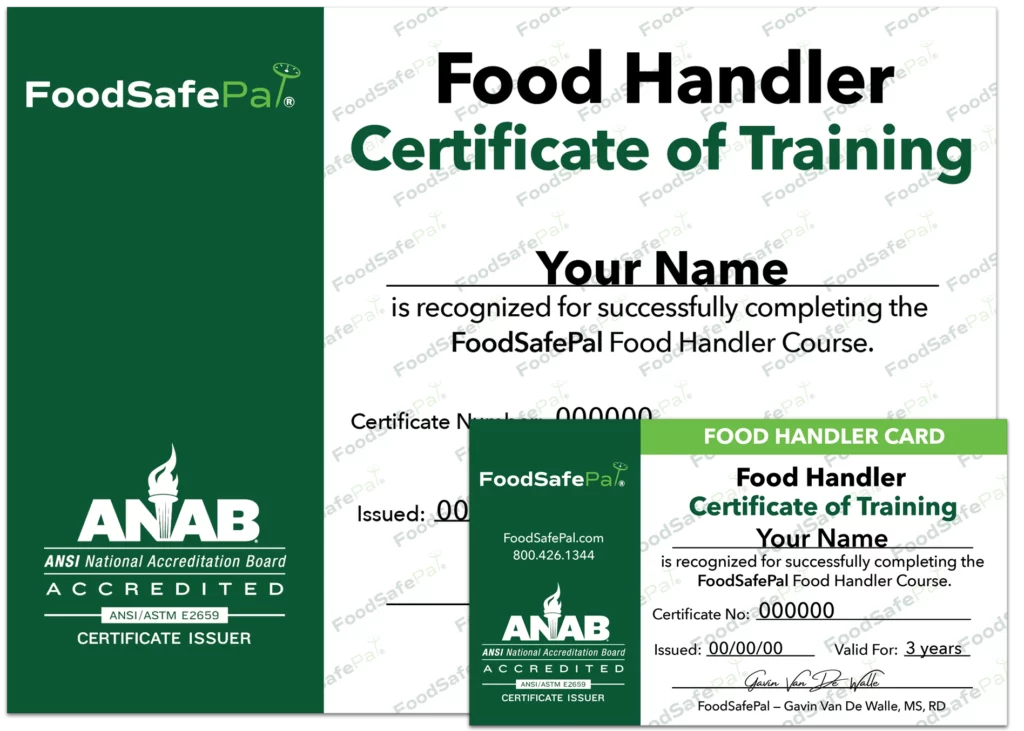
If you need a food handler card to work at Circle K, you can earn one online before your first shift. Simply enroll in an accepted food handler course, complete the training and test, and download or print your card or certificate.
If you plan to work food preparation shifts at Circle K through Shiftsmart, you can also upload your food handler card directly through the Shiftsmart app. The same state and local food handler requirements apply whether you work directly for Circle K or pick up shifts through Shiftsmart.
For more, see our Shiftsmart food handler card guide or our guide to food handler cards for gig work.
FoodSafePal’s food handler training can be completed entirely online in about 90 minutes. The standard course starts at $15, and your digital food handler card and certificate are available immediately after you pass.
Some states and counties require specific approved programs or issue their own credentials. For example, Washington requires its own state-issued food worker card, while Utah requires approved training followed by an official local health department permit.
NATIONALLY ACCEPTED · ANAB ACCREDITED
Need a Food Handlers Card for Circle K?
Train and test in as little as 90 minutes. Immediate access. Guaranteed acceptance.
If you’re a store manager or shift lead at Circle K
If you are applying for a food prep supervisor, assistant store manager, store manager, or another position responsible for overseeing food preparation and service, you may also need Certified Food Protection Manager (CFPM) certification.
Circle K job postings show that food manager certification can be a specific hiring qualification. For example, Food Captain positions advertised in Minnesota, Washington, and New York list food manager certification among their qualifications.
Some Circle K job postings identify particular certification organizations. However, these are not the only options for earning an accredited food manager certification. Any ANAB-CFP accredited certification program, including FoodSafePal, meets the national accreditation standard.
Many states require a certified food manager at establishments that prepare, handle, or serve certain unpackaged foods. However, convenience stores may qualify for exemptions depending on their food preparation activities and the requirements of the agency regulating the store.
For example, Florida requires regulated retail establishments that prepare or hold potentially hazardous foods to designate a CFPM.
Georgia has similar requirements for certain retail food operations. The Georgia Department of Agriculture specifically identifies hot holding pizza and reheating hot dogs for roller grills among the activities associated with its food manager certification requirement.
Minnesota provides an important exception. Stores whose food preparation is limited to heating or serving precooked hot dogs, sausages, nachos, pretzels, frozen pizza, and certain other low-risk activities may be exempt from its CFPM requirement. However, Circle K may still require certification for certain positions regardless of whether the store qualifies for an exemption.
Ohio also has additional requirements. Qualifying food establishments need someone with Ohio Person in Charge certification on duty, while risk level III and IV establishments must have an employee with Ohio Manager Certification.
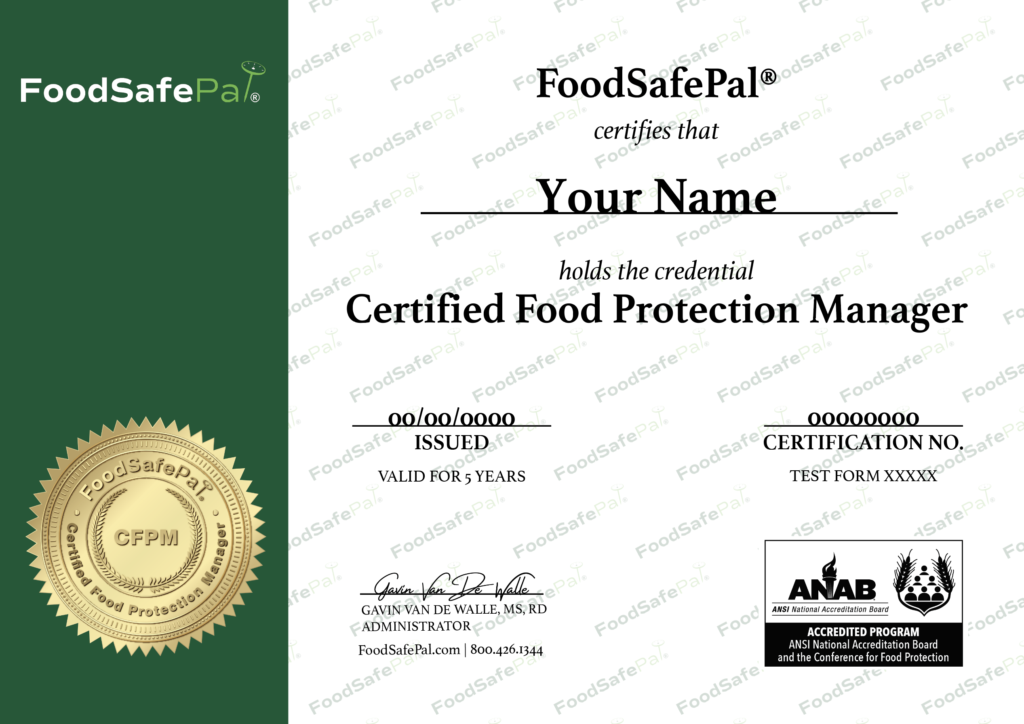
You earn CFPM certification by passing an exam from an ANAB-CFP accredited certification program. Training is recommended and may also be required by certain states.
FoodSafePal’s food manager certification exam is ANAB-CFP accredited and can be taken online from any private, quiet environment with a live human proctor.
Some states require an additional application or state-specific certification after passing the exam.
NATIONALLY ACCEPTED · 5-YEAR CREDENTIAL
Need to Get Food Manager Certified for Circle K?
Train, test, and certify entirely online — no testing center required.
Frequently asked questions
Does Circle K pay for your food handler card?
It depends on the store, its training policies, and where you work.
Circle K may provide food safety training during employee onboarding, but you should confirm whether your store pays for an external food handler course or reimburses employees who complete one.
Some states also have laws governing the cost of required employee training, so the employer’s responsibility may depend on where the store is located.
Do Circle K cashiers need a food handler card?
It depends on their duties and where they work.
Circle K cashiers may also be responsible for preparing and serving hot foods, maintaining roller grills, stocking food displays, or cleaning food service equipment.
When these duties involve unpackaged food, food equipment, utensils, or food-contact surfaces, food handler training requirements may apply.
If your responsibilities are limited to operating the register and stocking prepackaged merchandise, you may not need a food handler card.
How often do I need to renew my food handler card?
Renewal depends on where you work.
FoodSafePal’s standard food handler certificate is valid for three years, except in states such as Texas, where it is valid for two years.
Other state and county programs may have different expiration periods. Washington’s initial food worker card, for example, is valid for two years, while subsequent renewals can be valid for three or five years.
Check the expiration date on your card and the requirements where your Circle K is located before it expires.
The bottom line
You may need a food handler card to work at Circle K depending on your location, job duties, and the types of food prepared and served at your store.
Employees who prepare roller grill hot dogs, pizza, breakfast sandwiches, and other ready-to-eat foods are more likely to be covered by food handler requirements. Cashiers and sales associates may also need training if their responsibilities include handling unpackaged food or cleaning food service equipment.
Requirements differ considerably across Circle K’s largest markets. Texas, Illinois, and Arizona counties require food handler training for convenience store employees, while Florida, California, Georgia, Minnesota, and North Carolina have different requirements.
Even if a Circle K job posting doesn’t specifically mention a food handler card, you may still need to earn one after being hired to satisfy applicable food safety laws or company requirements.
If you want to get your card before applying or starting work, make sure the training is accepted where your Circle K is located.
And if you are applying for a management or leadership position, check whether you also need Certified Food Protection Manager certification or a state-specific credential.
You can earn your food handler card online with FoodSafePal in as little as 90 minutes and receive your digital certificate immediately after passing. For management positions, FoodSafePal also offers an ANAB-CFP accredited food manager certification exam that you can take online with a live human proctor.