West Virginia Cottage Food Law: Do You Need Food Safety Training?

Article Summary
Selling homemade food in West Virginia? The cottage food law doesn’t require food handler training, but getting your card can still give your business an edge. This quick video explains why it’s worth it, what you’re allowed to sell, and how to get your food handler card online with FoodSafePal.
Selling homemade food can be a great way to share your products and earn extra income, but every state has its own rules you need to follow.
Each state sets its own cottage food or “homemade food” laws that define what you can make, where and how you can sell it, and whether you need food safety training.
This article explains West Virginia’s cottage food law and whether you need food safety training to sell homemade food.
West Virginia cottage food law
West Virginia allows you sell many types of homemade foods that don’t require time or temperature controls for safety (TCS).
Examples of allowed foods include:
- Baked goods without cream, custard, cheese, or meat fillings
- Candy, fudge, and chocolate
- Honey, tree syrup, molasses, and apple butter
- Jams and jellies that meet acidity standards
- Dehydrated fruits and vegetables
- Dry soup mixes, dry pasta, and dry baking mixes
- Granola, trail mix, nut mixes, and popcorn
- Tea, dried herbs, and roasted coffee beans
In contrast, you cannot sell TCS foods, such as:
- Meat, poultry, fish, and seafood
- Milk and dairy products
- Eggs and egg-based foods
- Cooked foods like rice, beans, or vegetables
- Foods requiring pressure canning
- Baked goods that must be kept cold, such as cheesecake or custard-filled pastries
However, some acidified or fermented foods may be allowed under separate farmers market provisions or with Department of Agriculture oversight, but they may involve additional permits or safety controls.
If your product must be acidified, fermented, refrigerated, or otherwise controlled for safety, you should contact the West Virginia Department of Agriculture before selling it.
You can sell allowed foods directly to people in person, online or by phone, at farmers markets fairs, and similar events, and through third-party vendors, such as retail shops, when allowed.
Summary
West Virginia allows you to make and sell a wide range of shelf-stable, non-TCS foods to customers through various means, including online. You cannot sell foods that require refrigeration or specialized processing.
Do you need food safety training to sell homemade food in West Virginia?
The state doesn’t require food safety training or a West Virginia food handler card to sell homemade food under the cottage food exemption.
But for most people who are serious about selling food, stopping there is a missed opportunity.
Even though the state doesn’t require training, customers still care about food safety, and trust plays a huge role in whether someone chooses to buy from you — especially when the food is made in a home kitchen.
A food handler card gives you something concrete to point to. It shows customers that you didn’t just do the bare minimum, but that you took the time to learn how to handle food safely. That kind of trust sells, particularly at farmers markets, community events, and online where buyers have many options.
Training can also make it easier to access more selling opportunities.
Some farmers markets, fairs, festivals, or other venues set their own participation rules and may require or strongly prefer proof of food safety training, even when the state does not. Having a food handler card ready removes friction and helps you avoid getting turned away.
The same applies to liability insurance.
Many insurance providers that cover home-based food businesses ask about food safety training as part of their underwriting process. Being able to show documented training can make it easier to qualify for coverage and avoid delays or follow-up questions.
Beyond access and credibility, training helps you run your business with confidence.
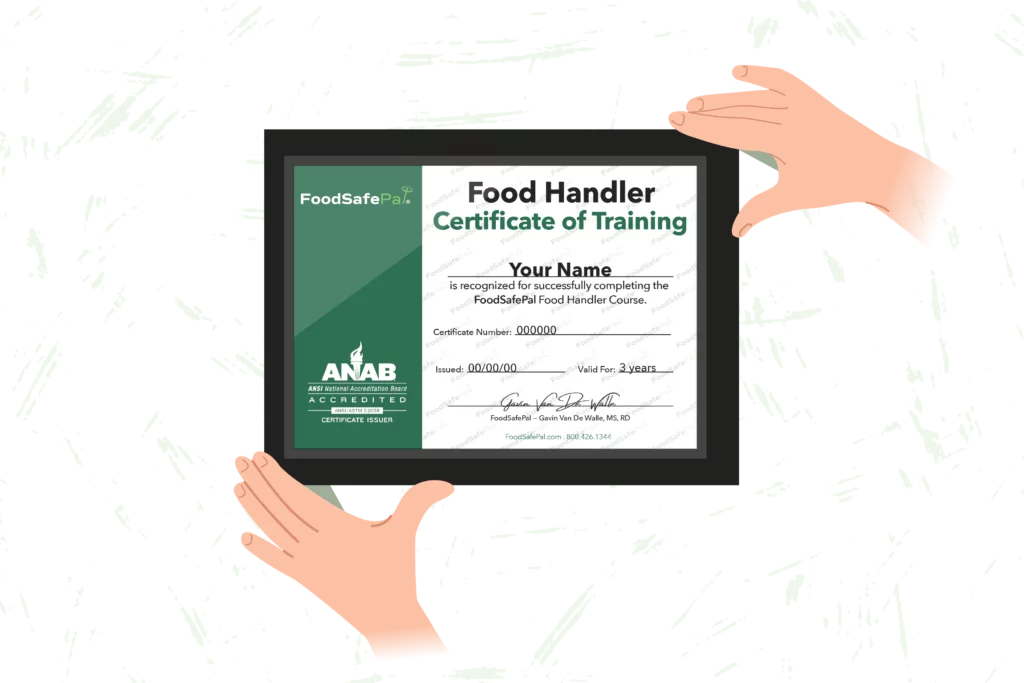
If you decide to get trained, choose an ANSI–National Accreditation Board (ANAB)–accredited food handler course so your training meets recognized national standards.
FoodSafePal’s Food Handler course is ANAB accredited, fully online, and takes about 90 minutes to complete. Once you pass, you’ll get instant digital access to your food handler card and certificate, plus the option to order a printed version for display at markets or for your records.
Get Your West Virginia Food Handlers Card
Instant certificate. 100% online in about 90 minutes.
Summary
West Virginia does not require food safety training to sell homemade foods, but earning an ANAB-accredited food handler card, like the one offered by FoodSafePal, can help you meet market or insurance requirements and show customers you take their health seriously.
Labeling and consumer notice requirements
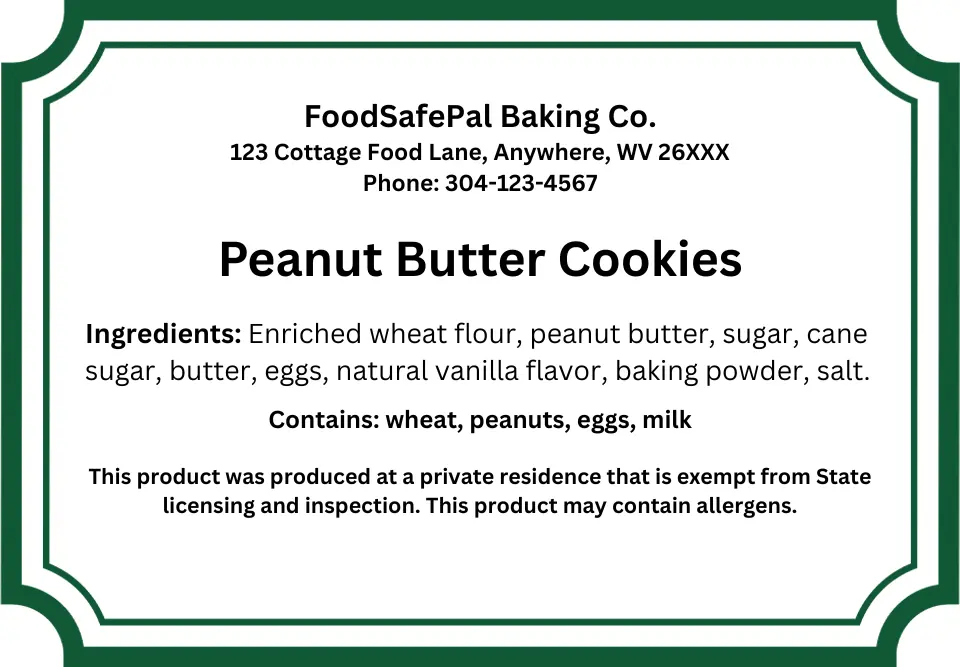
West Virginia requires every product you make to have a label with certain information.
Each label must include:
- Your name, home address, and telephone number
- The common or usual name of the product
- A list of ingredients in descending order by weight
- The required consumer notice: “This product was produced at a private residence that is exempt from State licensing and inspection. This product may contain allergens.”
Summary
Every product you sell must include a label with information like you contact information, a full ingredient list, and the required disclaimer.
The bottom line
West Virginia’s cottage food law allows you to make and sell many types of nonpotentially hazardous, shelf-stable foods without permits, inspections, or licensing fees.
The state does not require food safety training, but successful sellers rarely rely on the minimum. A food handler card helps build trust with customers, meet expectations from markets and event organizers, and satisfy insurance providers — all of which directly impact your ability to grow and sell consistently.
For many West Virginia cottage food producers, earning an ANAB-accredited food handler card from FoodSafePal becomes a no-brainer. It’s a simple step that strengthens credibility, opens doors, and supports a more professional and profitable food business.
Get Your West Virginia Food Handlers Card
Instant certificate. 100% online in about 90 minutes.