Massachusetts Cottage Food Law: Do You Need Food Safety Training?

Article Summary
Selling homemade food in Massachusetts? The state cottage food law doesn’t require food handler training, but several counties and cities do. Even if it’s not required, getting your card can still give your business an edge. This quick video explains why it’s worth it, what you’re allowed to sell, and how to get your food handler card online with FoodSafePal.
Selling homemade food can be a great way to share your products and earn extra income, but every state has its own rules you need to follow.
Each state sets its own cottage food or “homemade food” laws that define what you can make, where and how you can sell it, and whether you need food safety training.
This article explains Massachusetts’ rules for Residential Kitchens and whether you need food safety training to sell homemade food.
Massachusetts cottage food law
Massachusetts does not use the term “cottage food law,” but it regulates homemade food production through its Residential Kitchen framework. A Residential Kitchen is a kitchen in a private home, and depending on what you make and how you sell it, you may need a Retail Residential Kitchen permit (direct-to-consumer sales) or a Wholesale Residential Kitchen license (selling to stores or restaurants).
Retail Residential Kitchens are for selling cottage-type foods directly to consumers, such as at farmers markets, community events, or online where the operator personally hands off the food. Wholesale Residential Kitchens are for producing shelf-stable foods that can be sold to stores, groceries, and restaurants.
Massachusetts allows only foods that are safe at room temperature. These include a variety of non-time/temperature control for safety foods like:
- Baked goods that do not require refrigeration
- Jams and jellies
- Shelf-stable candies
- Dry mixes
- Dry herbs and blends
- Roasted or coated nuts
- Shelf-stable breads, cookies, muffins, and cakes
Foods that require refrigeration or hot holding cannot be made in a Residential Kitchen. Examples include:
- Cream-filled pastries
- Cheesecake
- Custard or cream pies
- Cut fruits or vegetables
- Tomato sauce, salsa, and other acidified foods
- Pickled products, relishes, and salad dressings
- Any meat or fish product, raw or heat-treated
Certain processes are also prohibited, such as acidification, hot fill, vacuum sealing, curing, smoking, and most thermal processing in hermetically sealed containers, except for jams and jellies.
If the health department needs to confirm that a food is truly shelf-stable, they may require laboratory testing for pH, water activity, or other safety indicators. Using standardized recipes that have been evaluated by a food lab can help simplify compliance.
Retail Residential Kitchens are permitted and inspected by the local board of health, while Wholesale Residential Kitchens are licensed by the Massachusetts Department of Public Health.
Summary
Massachusetts allows you to make a variety of shelf-stable foods from your home kitchen with the appropriate permit. Foods requiring refrigeration or specialized processing are not allowed. Retail permits are issued locally, while wholesale licenses are issued by the state.
Do you need food safety training to sell homemade food in Massachusetts?
Massachusetts’ statewide Residential Kitchen guidance does not require food safety training or a Massachusetts food handler card. However, local boards of health often add training requirements as part of their permitting process, and some cities require more extensive credentials.
Boston is one of them. Under Boston’s Retail Residential Kitchen ordinance, permit holders and anyone working in the kitchen must:
- Complete a nationally accredited food protection manager certification exam
- Complete an ANAB-accredited Food Allergen Awareness Training or Food Handler Training
Several other Massachusetts communities, including Tewksbury and Concord, have similar expectations and require Retail Residential Kitchen operators to hold a Certified Food Protection Manager (CFPM) credential and complete allergen training.
This means training requirements vary depending on where you operate. Some towns may accept basic food handler training, while others require the CFPM credential.
FoodSafePal can help you meet these training needs.
FoodSafePal’s Food Handler course includes the essential allergen awareness information many Massachusetts cities require. Operators in towns like Boston can use it to meet their allergen training requirement.
For areas that require a CFPM certification, our Food Manager Training is available now, and FoodSafePal will soon offer the fully accredited CFPM exam. Anyone can enroll in the training to prepare, and once the accredited exam launches, you will be able to complete the full certification through FoodSafePal.
Even in cities where training is not required, completing a course can help you build trust with customers, meet expectations from markets or insurers, and show regulators that you take food safety seriously.
FoodSafePal’s Food Handler course is ANAB accredited, fully online, and takes about 90 minutes to complete. Once you pass, you’ll get instant access to your digital card and certificate, with the option to order a printed version for your records.
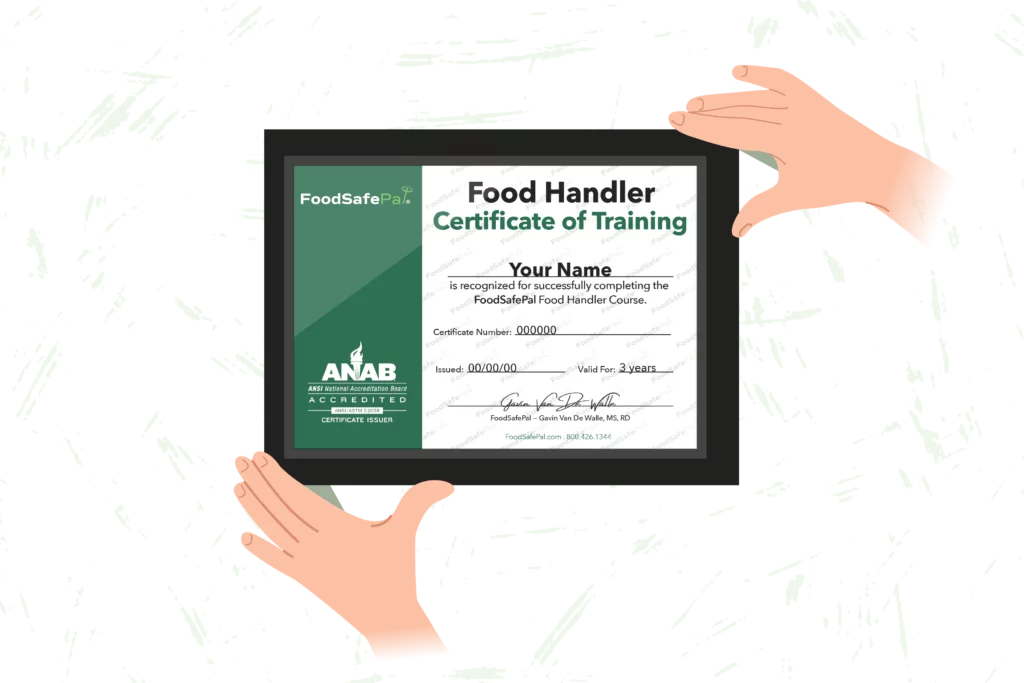
Get Your Massachusetts Food Handlers Card
Instant certificate. 100% online in about 90 minutes.
Summary
Massachusetts does not have a universal statewide training requirement, but many local jurisdictions — including Boston — require a food protection manager certification and allergen awareness training. FoodSafePal’s Food Handler course includes allergen content needed to satisfy many local expectations, and our Food Manager Training prepares you for the CFPM exam that will be accredited and available soon.
Labeling requirements
Massachusetts does not publish a single statewide cottage food labeling rule, but Residential Kitchen products are still considered packaged foods and must meet standard labeling requirements under state and federal law. Because permitting is handled at the local level, boards of health may set additional expectations as part of the Retail Residential Kitchen permit.
Labels generally must include:
- The name and address of your Residential Kitchen
- The product name
- Ingredients listed in descending order by weight
- Major allergens
- Net weight or volume
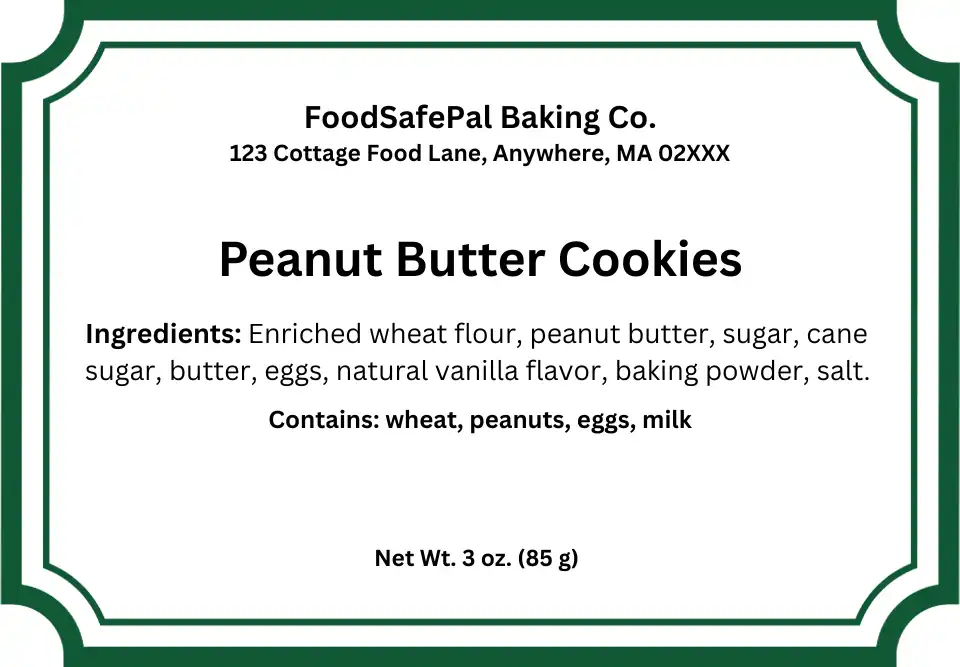
Some Massachusetts cities and towns also require a statement indicating that the food was prepared in a home or Residential Kitchen. This statement is not required under state law but may appear as a condition of your local permit. For example, several communities require language such as:
“Made in a Residential Kitchen that is not subject to the same routine inspection as a commercial food establishment.”
In addition, certain municipalities require that your permit number appear on labels or in advertising materials. Boston’s ordinance, for example, requires the Retail Residential Kitchen permit number to be included on all promotional materials for the operation.
For large or unpackaged items such as custom cakes, the required label information may be provided on an invoice or information sheet given to the customer.
Summary
Residential Kitchen products in Massachusetts must follow standard labeling rules, including product name, address, ingredients, allergens, and net quantity. Some cities and towns may also require a home-kitchen disclosure statement. Always confirm specific labeling expectations with your local board of health, as requirements vary across the state.
The bottom line
Massachusetts allows you to produce and sell many shelf-stable foods from your home kitchen with the proper permit. Foods requiring refrigeration or specialized processing are not allowed.
Training requirements depend on where you operate. Some cities, like Boston, require both allergen training and the CFPM credential. FoodSafePal’s Food Handler course includes the allergen awareness content needed in many communities, and our Food Manager Training prepares operators for the accredited CFPM exam that will be available soon.
Completing an ANAB-accredited course can help you meet local permitting requirements, build trust with customers and markets, and ensure safe practices as you grow your homemade food business.
Get Your Massachusetts Food Handlers Card
Instant certificate. 100% online in about 90 minutes.