Washington Cottage Food Law: Do You Need Food Safety Training?

Article Summary
Selling homemade food in Washington? The cottage food law requires a state-issued food worker card. This quick video explains how to get an approved card, what you’re allowed to sell, and labeling requirements.
Selling homemade food can be a great way to share your products and earn extra income, but every state has its own rules you need to follow.
Each state sets its own cottage food or “homemade food” laws that define what you can make, where and how you can sell it, and whether food safety training is required.
This article explains Washington’s cottage food law and whether you need food safety training to sell homemade food.
Washington cottage food law
Unlike most other states, Washington requires cottage food businesses to operate under a state-issued permit.
This permit allows you to make and sell non-potentially hazardous foods from your home kitchen. These foods must be shelf-stable and safe to store at room temperature, meaning they do not require refrigeration or freezing to prevent the growth of harmful bacteria.
Commonly allowed foods include:
- Candies cooked on a stovetop or in a microwave
- Dry goods and repackaged items from approved sources
- Baked or fried products made with residential kitchen equipment
- Jams, jellies, preserves, and fruit butters made according to federal standards
- Pies that do not require refrigeration, excluding custard-style pies or pies with fresh, unbaked fruit
Foods that require refrigeration or present higher food safety risks are not allowed under Washington’s cottage food program.
Examples include:
- Ice or ice products
- Beverages of any kind
- Fresh or cut fruits and vegetables
- Juices made from fresh fruits or vegetables
- Barbecue sauces, ketchup, mustard, or similar condiments
- Focaccia-style breads with vegetables or cheese
- Milk and dairy products, including cheese and yogurt
- Meat, poultry, or fish products of any kind, including jerky
- Foods not intended for human consumption, including pet treats
- Canned fruits or vegetables, vegetable butters, salsas, and pickled products
- Baked goods that require refrigeration, such as cream pies, custard desserts, or pastries with cream cheese fillings
You can sell allowed foods directly to the end customer from your home, at farmers markets, at craft fairs and community events, and through in-person transactions arranged online
However, you cannot not sell wholesale, on consignment, or through retail stores. Shipping cottage food products by mail or courier is not allowed, and all sales must be made directly to the end consumer.
Local zoning and business rules still apply. Some cities or counties may restrict or prohibit home-based food businesses, so it’s important to check local requirements before operating.
Summary
Washington allows cottage food production only for approved, shelf-stable foods sold directly to consumers. Foods that require refrigeration, contain meat or dairy, or otherwise pose higher risks are not allowed. Sales channels are limited, and local regulations may apply.
Do you need food safety training to sell homemade food in Washington?
Washington requires food safety training for cottage food operators.
Anyone involved in preparing or handling cottage food products must hold a Washington State Food Worker Card. This card must be issued through the Washington State Department of Health or a local county health department.
Unfortunately, food handler cards from third-party or ANSI-Nationally Accreditation Board (ANAB)-accredited providers, including FoodSafePal, are not accepted for cottage food compliance in Washington.
Summary
Washington requires all cottage food operators and workers to hold a Washington-issued Food Worker Card. Food handler cards issued by ANAB-accredited programs, including FoodSafePal’s, are not accepted.
Labeling requirements in Washington
Washington requires all cottage food products to be properly labeled so consumers know what they are purchasing and where it was made.
Each label must include:
- The name of the food product
- The name of the cottage food operation and permit number
- A complete ingredient list in descending order by weight, including sub-ingredients
- Allergen information
- Net weight or net volume
- The required statement in at least 11-point type: “MADE IN A HOME KITCHEN THAT HAS NOT BEEN SUBJECT TO STANDARD INSPECTION CRITERIA”
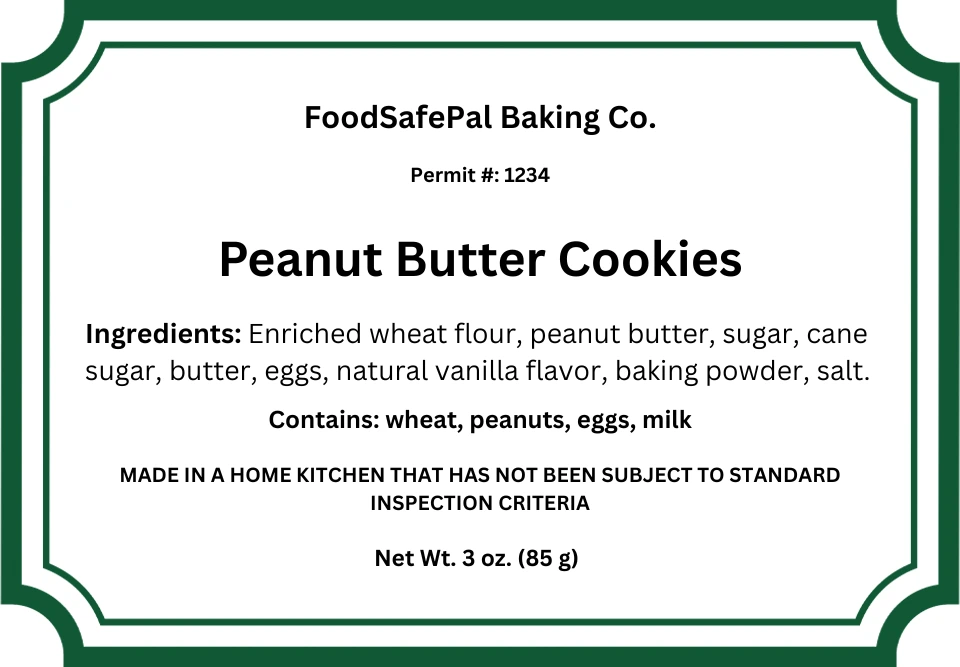
Handwritten labels are acceptable if they are legible, permanent, and meet minimum size requirements.
If a product contains tree nuts, the specific type of nut must be identified. For items that are not easily packaged, such as wedding cakes, required labeling information may be provided on an ingredient sheet delivered with the product.
Summary
Every cottage food product sold in Washington must include clear labeling with product details, ingredients, allergens, permit identification, net quantity, and the required home kitchen disclosure.
The bottom line
Washington’s cottage food law is more strict than many other states.
To sell homemade food legally, you must produce only approved shelf-stable foods, sell directly to consumers, follow strict labeling rules, and complete food safety training through a Washington-issued Food Worker Card.
Foods that require refrigeration, contain meat or dairy, or otherwise present higher food safety risks are not allowed, and selling through retail or shipping products is prohibited.