Alaska Cottage Food Law: Do You Need Food Safety Training?

Article Summary
Selling homemade food in Alaska? The cottage food law doesn’t require food handler training, but getting your card can still give your business an edge. This quick video explains why it’s worth it, what you’re allowed to sell, and how to get your food handler card online with FoodSafePal.
Selling homemade food can be a great way to share your products and earn extra income, but every state has its own rules you need to follow.
Each state sets its own cottage food or “homemade food” laws that define what you can make, where and how you can sell it, and whether you need food safety training.
This article explains Alaska’s homemade food law and whether you need food safety training to sell homemade food.

Alaska cottage food law
Alaska allows you to make and sell many types of homemade foods from either your home kitchen or a privately leased kitchen without a state permit or inspection.
Alaska’s law covers both non-potentially hazardous foods and certain potentially hazardous foods that require time or temperature control for safety.
Examples of non-potentially hazardous foods allowed under Alaska’s homemade food exemption include:
- Bread, cakes, cookies, crackers, and muffins
- Jams and jellies
- Vinegar, mustards, salsas, relishes, and sauces
- Fudge, candies, brittles, and confections
- Pickles, kimchi, sauerkraut, and other fermented foods
- Popcorn and snack mixes
- Dried herbs, spice blends, roasted coffee beans, and tortillas
Alaska also allows some potentially hazardous foods to be sold as homemade food. These foods require refrigeration for safety and must be sold directly to the customer. Examples include:
- Cheesecake
- Pumpkin pie and lemon meringue pie
- Hummus
- Fresh vegetable juices
- Cold brew coffee
- Baked goods requiring refrigeration
Alaska’s homemade food rule also covers foods made with USDA-inspected meat or poultry, such as taco salads, sandwiches, or casseroles. These are considered potentially hazardous and must be sold directly by you, not through a third party.
Home-canned foods may be sold as long as they follow tested, proven recipes. Dried, dehydrated, and freeze-dried foods are also allowed, provided the final product is non-potentially hazardous.
Some foods are not allowed under any circumstances, including items containing raw or unpasteurized milk, uninspected meat or poultry, game meat, seafood or shellfish, reindeer meat products, oils rendered from animal fats, and any food containing controlled substances.
Summary
Alaska allows a wide range of non-potentially hazardous foods and also permits certain potentially hazardous foods. Products with raw milk, uninspected meat, game meat, seafood, shellfish, or rendered animal fats are not allowed.
Do you need food safety training to sell homemade food in Alaska?
Alaska does not require the completion of food safety training. But even though training is not required, earning an Alaska food handlers card can be a major advantage for your business.
When customers buy your products, they want to feel confident that you prepared them safely. A food handler card signals professionalism and helps build trust — especially important if you sell potentially hazardous.
Food safety training can also open doors. Some farmers markets, retailers, and event organizers may ask vendors to show proof of training, even when the state doesn’t require it. Having a recognized, accredited food handler card can help you meet these expectations and may also support smoother insurance approval.
If you decide to get trained, choose an ANSI–National Accreditation Board (ANAB)–accredited course so your training meets national food safety standards.
FoodSafePal’s Food Handler course is ANAB accredited, fully online, and takes about 90 minutes to complete. After you pass, you’ll receive instant digital access to your food handler card and certificate, with the option to order a professional printed version if you want one.
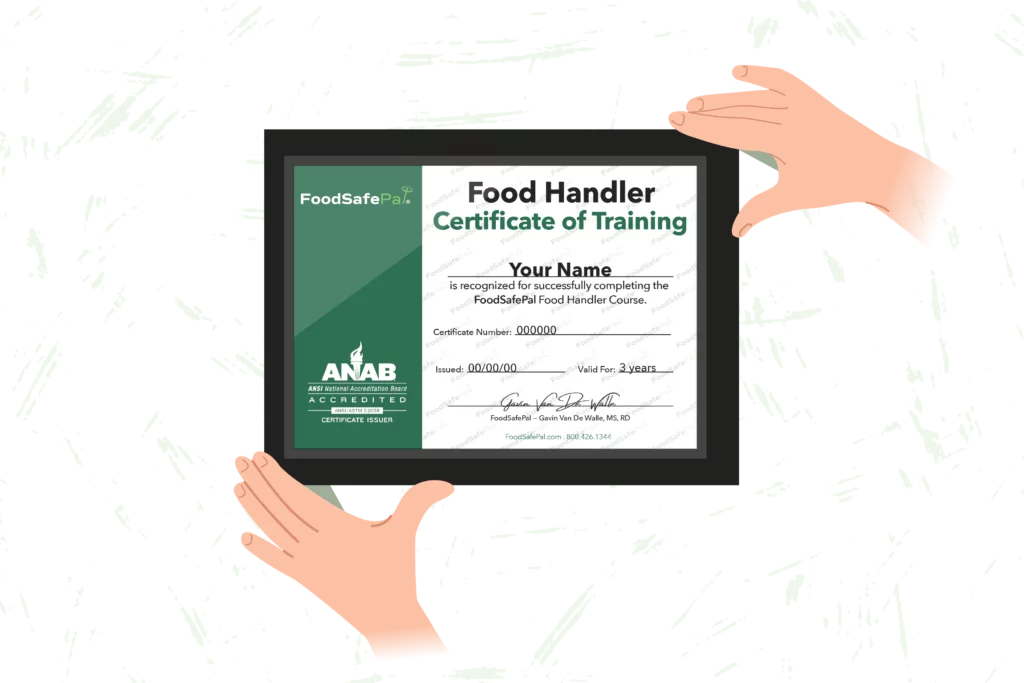
Get Your Alaska Food Handlers Card
Instant certificate. 100% online in about 90 minutes.
Summary
Alaska does not require food safety training to sell homemade foods, but earning an ANAB-accredited food handler card from FoodSafePal can help you build customer trust, meet market or event expectations, and support safer food handling in your home kitchen.
Labeling requirements
Alaska requires all homemade food sold in packages to include a label with specific information.
Each label must include:
- Your name
- Your current address and telephone number
- Your Alaska business license number
- The following statement: “This food was made in a home kitchen, is not regulated or inspected, except for meat and meat products, and may contain allergens.”
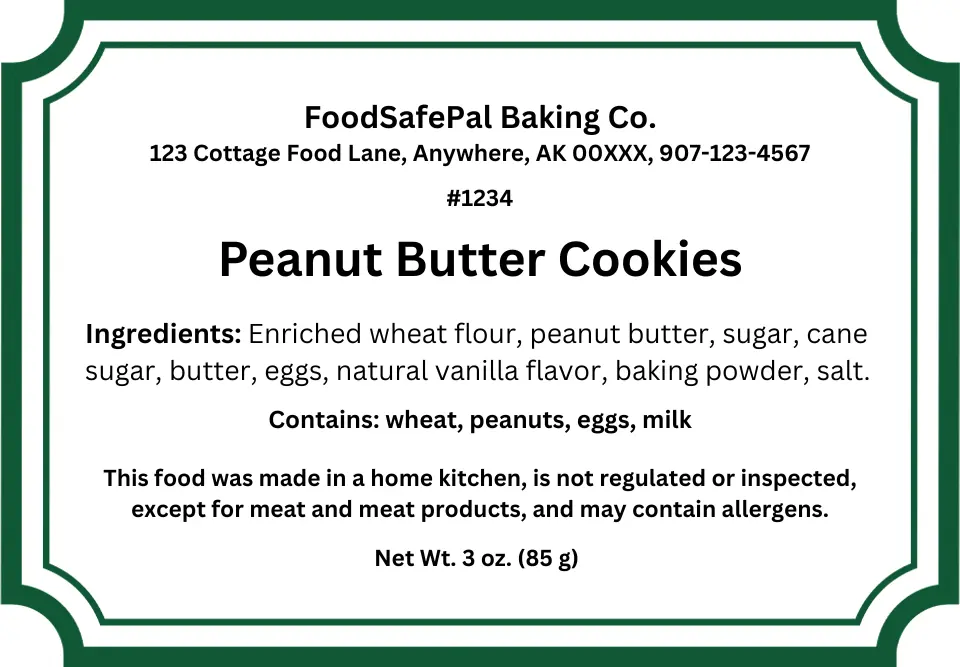
While not required, it’s also best practice to include the ingredients in descending order by weight, allergen information, and the net weight or quantity.
Unpackaged foods may be sold, but the producer must verbally inform the buyer that the food is not regulated or inspected and provide their name, address, phone number, and business license number.
Summary
Alaska requires full labeling on packaged homemade foods, including your contact information, business license number, ingredient list, allergens, and the required disclosure statement.
The bottom line
Alaska’s homemade food law is one of the broadest in the country, allowing many non-potentially hazardous foods and even certain potentially hazardous foods. Products containing raw milk, uninspected meat, game meat, seafood, or rendered animal fats are not allowed.
Food safety training is optional, but earning an ANAB-accredited food handler card from FoodSafePal can help you build trust, meet event or retail expectations, and support consistent food safety practices.
All packaged homemade foods require a label, and sellers must follow Alaska’s rules for direct sales, online sales within the state, and local requirements.
Get Your Alaska Food Handlers Card
Instant certificate. 100% online in about 90 minutes.