Don’t Fail the Food Handlers Test (3 Mistakes to Avoid)

Article Summary
Failing a food handler exam is usually the result of avoidable mistakes rather than difficult material. This guide identifies the three most common pitfalls learners face and provides actionable strategies to help you avoid those mistakes.
Whether you work at a food establishment or plan to start a homemade food business, there’s a good chance you’re required to earn a food handler card.
Getting one means completing a food handler training course and passing a final exam. On paper, that sounds simple. In practice, many people still struggle — not because the material is overly complex, but because they make avoidable mistakes during the course or the test itself.
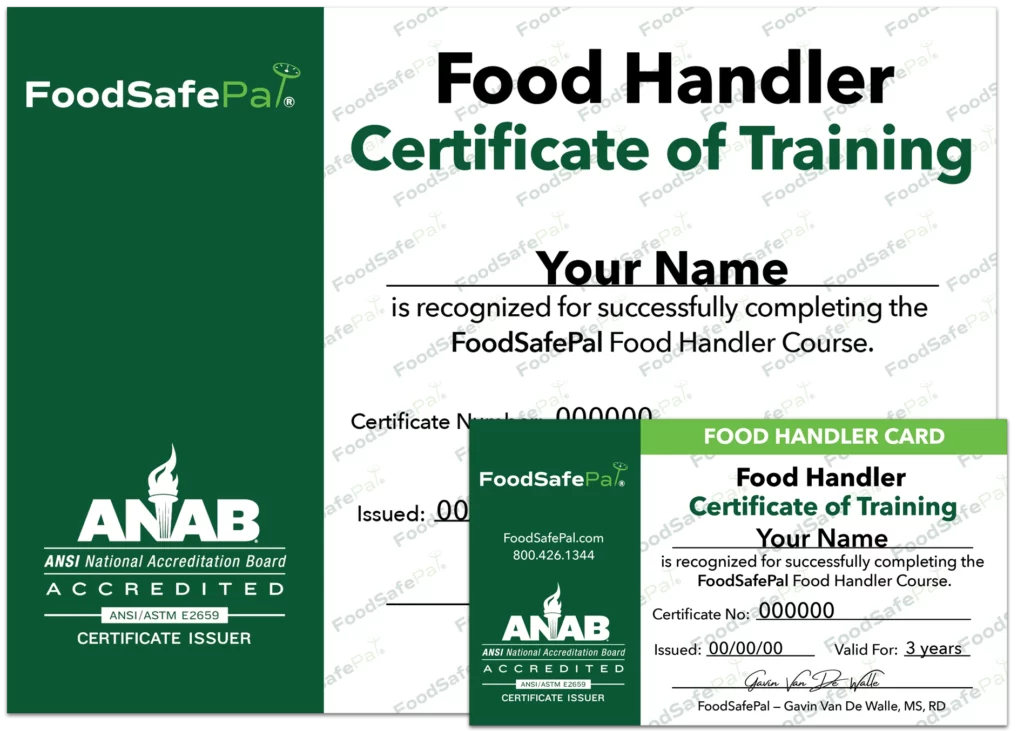
As the program administrator for FoodSafePal, I’ve reviewed results from thousands of food handler exams and heard direct feedback from learners across the country. We’ve issued tens of thousands of food handler cards, and over time, clear patterns emerge when someone doesn’t pass on the first attempt.
Most food handler training providers, including FoodSafePal, allow at least one free retake. That helps reduce pressure, but relying on a second attempt isn’t ideal — especially if your job, start date, or business plans depend on passing quickly.
Based on real exam data and real learner feedback, here are the three most common mistakes that lead to failing a food handler test — and what to do instead so you can pass the first time.
Mistake 1: Breezing over the course content
One of the biggest misconceptions people have about the food handler test is thinking it covers material outside the course.
Under ANSI National Accreditation Board standards, every food handler exam question must be directly mapped to the training content. If a topic is not covered in the course, it cannot appear on the test. This applies specifically to accredited food handler programs – non-accredited courses may not follow the same exam-to-content requirements.
That’s good news, but only if you actually engage with the material.
Because food handler exams are built entirely from the course content, skipping ahead, multitasking, or half-watching sections increases the risk of missing details that later appear on the exam. This is especially common in video-based courses, where learners may scrub through videos or watch at faster speeds to finish more quickly.
While playback controls can be helpful, using them too aggressively makes it easy to gloss over key points — such as temperature thresholds, handwashing steps, or contamination scenarios — that are commonly tested.
What to do instead
Use the course structure as your roadmap. Topics that repeat, appear in multiple scenarios, or show up in knowledge check questions deserve extra attention. If you miss a knowledge check, review that section before moving on — those same concepts often appear on the final exam.
Mistake 2: Ignoring topics that seem irrelevant to your job
Accredited food handler courses are designed to cover food safety across the entire flow of food — from receiving and storage to preparation, service, and cleanup.
Because of that, not every topic will feel directly relevant to every role. Servers, bussers, and dishwashers may not actively cook food. Home-based food businesses may have limited menus or operate under cottage food laws that reduce certain risks.
When learners encounter sections that don’t match their day-to-day responsibilities, it’s common to mentally tune them out and focus only on what feels applicable. This is a classic example of selective attention — filtering information based on perceived relevance.
But the exam doesn’t work that way.
Under ANAB standards, food handler exams assess knowledge of the full scope of food safety covered in the course, not just the parts tied to a specific job role or business model. If a topic is included in the training, it is fair game for the test — even if it’s not something you personally do at work.
What to do instead
Approach the course with a test-first mindset rather than a job-specific one. When reviewing material, shift from “Do I do this at work?” to “Could this be tested?”
Pay extra attention to topics that feel unfamiliar or outside your role — those are often the areas where people struggle on the exam. If a concept appears in a knowledge check, scenario, or example, assume it’s important to understand, even if it doesn’t apply to your daily tasks.
Mistake 3: Misreading what the question is actually asking
Many people fail food handler exams not because they don’t know the material, but because they answer the wrong question.
Accredited food handler exams are not designed to trick or confuse test takers. Under ANAB standards, exam questions must be clear, aligned with the course content, and routinely analyzed to ensure they are neither misleading nor unfair. Questions that are unclear, poorly worded, or misaligned with the training are revised or removed through ongoing question analysis.
When people miss questions, it’s often because they read too quickly and latch onto a familiar word or scenario, rather than slowing down to understand exactly what’s being asked. This commonly shows up with questions that use qualifiers like “most important,” “best,” “first,” or “when is it acceptable,” where more than one answer may seem reasonable at a glance.
What to do instead
Slow down and read each question carefully. Before looking at the answer choices, make sure you understand what the question is asking you to choose — not just the topic, but what it wants you to decide.
Then:
- Read every answer choice, even if the first one sounds right
- Cross out answers that don’t actually fit the question
- Pay attention to words like first, best, or safest, which can change what the question is asking
Food handler exams are not timed, so there’s no reason to rush. Taking a few extra seconds per question to double-check what’s being asked can prevent simple mistakes and greatly improve your chances of passing on the first try.
The bottom line
Most people who fail a food handler test don’t fail because the material is hard. They fail because of a few predictable mistakes.
After reviewing results from thousands of food handler exams and hearing direct feedback from learners across the country, the same patterns come up again and again. People rush through the course, tune out topics that don’t feel relevant to their job, or miss questions simply because they didn’t slow down and read carefully.
The fix isn’t studying longer or memorizing random facts. It’s understanding how accredited food handler courses and exams are actually built. Every question comes directly from the course content, covers core food safety principles, and is written to be clear and fair. When you engage with the full course and take your time on the exam, passing on the first attempt becomes much more likely.
If you’re ready to earn your food handler card, you can do so through FoodSafePal. I oversee the program and exam development, and the course is designed to match what’s tested — nothing more, nothing less — with knowledge checks built in to help you catch issues before the final exam.
Earn or Renew Your Food Handler Card in 90 Minutes
Trusted by thousands. The fastest, most reliable way to meet your health department’s requirements.