
How Early You Can Renew a Food Handler Card (And When You Should)

Article Summary
Food handler cards typically expire every two to three years, and most people can renew as early as they want with no minimum waiting period. The practical sweet spot is about 30 days before expiration to avoid gaps. In most cases you can renew with any accepted provider, including FoodSafePal.
Whether you earned your food handler card for a job, to sell homemade food, or to strengthen your resume, keeping it current matters.
Food handler cards don’t last forever. Most expire within two to three years, and some jurisdictions require renewal even sooner. Letting your card expire can create unnecessary problems, including delays in starting work, scheduling shifts, or continuing to sell food legally.
At the same time, many people are unsure how early they’re allowed to renew. Is there a minimum window? Can you renew too soon? And does renewing early change your expiration date?
This article breaks down when you can renew a food handler card, when you should renew it, and how to avoid gaps so you’re never caught off guard.
When can you renew a food handlers card?
Most food handler cards are valid for two to three years, depending on state or local requirements. For example, many states allow a three-year validity period, while Texas requires renewal every two years.
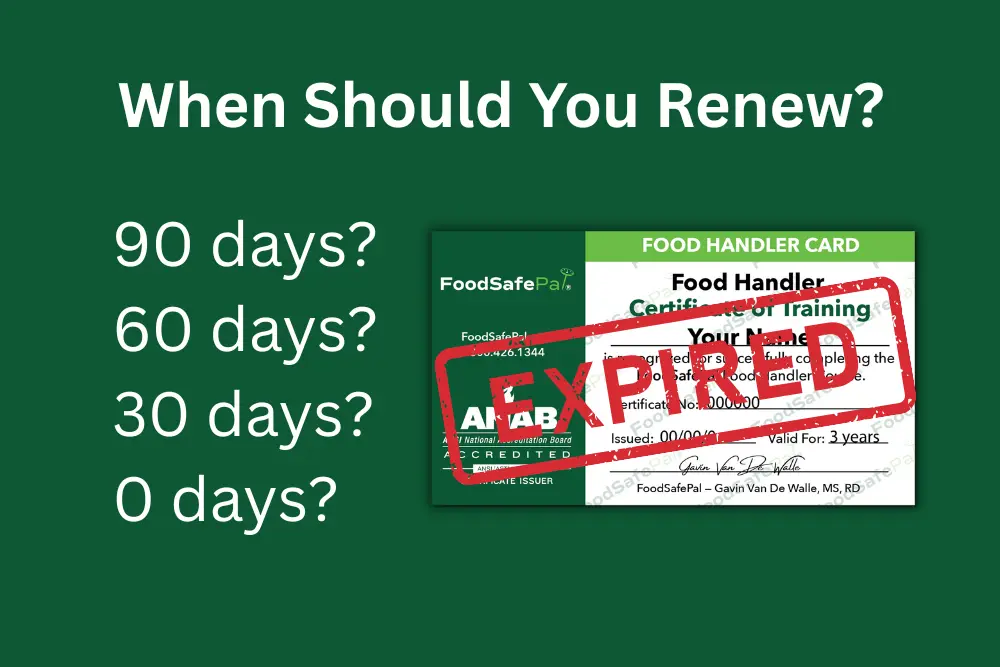
In most cases, you’re allowed to renew your food handler card before it expires. There is typically no minimum waiting period, which means you can renew weeks or even months in advance if you choose.
In practice, most people begin thinking about renewal one to two months before their card expires. That said, some FoodSafePal learners choose to renew much earlier, sometimes six months to a year in advance, simply to avoid forgetting or dealing with it later.
Renewing very early doesn’t provide additional benefits in terms of validity length, but it can reduce stress and eliminate the risk of an accidental lapse. To help with timing, FoodSafePal sends renewal reminders 90, 60, 30, and 7 days before expiration, unless the card is renewed earlier.
If your food handler card does expire, there are usually no late fees or penalties from the course provider itself, and renewal typically just means completing the course again. However, if a health department or employer identifies a gap in validity, that can lead to compliance issues or additional scrutiny.
As a general rule, renewing at least 30 days before expiration is a safe approach. That said, there is usually no penalty from the issuing organization if you renew earlier, right before expiration, or even after the card has expired.
You will find the expiration date on the food handlers card itself. If you lost your food handlers card or cannot access it, you’ll have to contact the company through which you earned it.
Renew Your Food Handler Card in 90 Minutes
Trusted by thousands. The fastest, most reliable way to meet your health department’s requirements.
How to renew your food handlers card
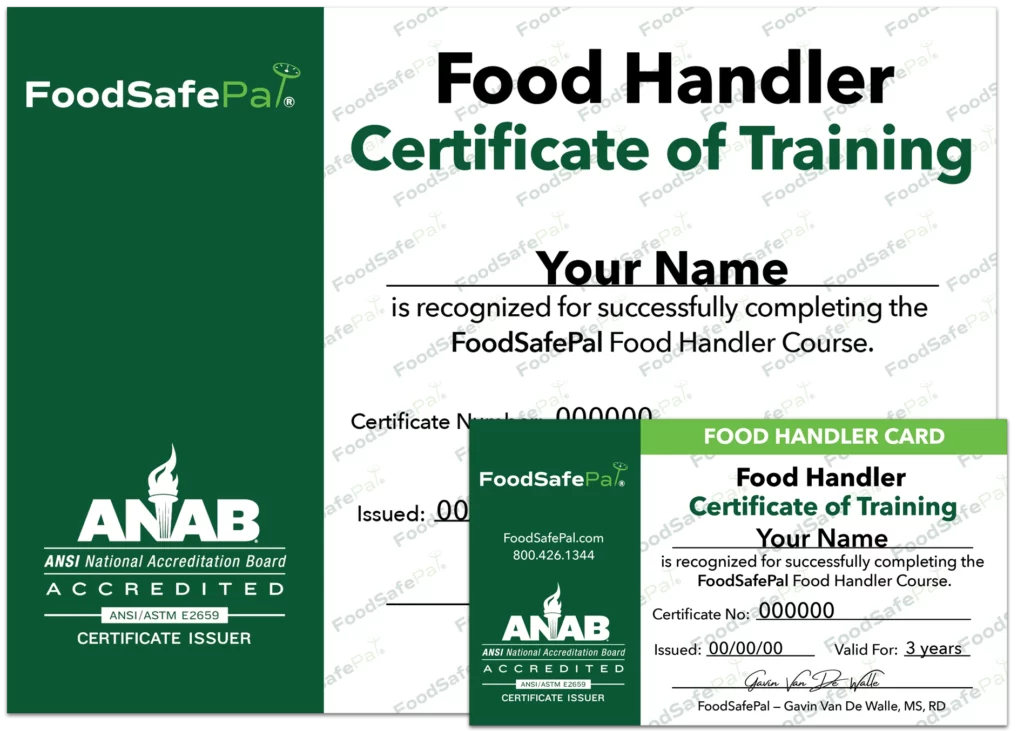
To renew a food handler card, you generally repeat the same steps you completed the first time. There’s no shortened renewal version.
That means enrolling in an approved food handler course, completing the training, and passing the final exam. For most programs, the entire process takes about one to two hours. Many learners are able to complete FoodSafePal’s training and exam in roughly 90 minutes.
One important exception is that you are not required to renew with the same provider you originally used, unless your employer or local health department specifically requires it.
For example, some jurisdictions issue their own food handler cards and do not accept cards from third-party providers. Washington State and certain cities, such as New York City, fall into this category. In those cases, you must renew directly through the approved government program.
Outside of those exceptions, most health departments accept food handler cards issued through ANSI–National Accreditation Board (ANAB)–accredited courses. This means that if you earned your card with one provider, you can usually renew it with another, and vice versa.
Many learners who originally earn their food handler card with FoodSafePal choose to renew with us simply because the process is straightforward, time-efficient, and transparent. We clearly disclose where our food handler card is not accepted, helping learners avoid wasted time or unnecessary repeat training.
To renew with FoodSafePal, you can select your state and enroll online here. If you previously earned your food handler card with us, you’ll log into your existing account before checkout. At that point, you can choose a digital certificate or upgrade to a professionally printed card mailed to you.
Once enrolled, you can begin the training immediately. Progress is saved automatically, so you can complete the course and exam in one sitting or return later as needed.
The bottom line
Food handler cards are valid for a limited time, typically two to three years, with some states and local jurisdictions requiring renewal sooner. While you can renew as early as you like, renewing about 30 days before expiration is a practical sweet spot for most people.
From the course provider’s standpoint, there is usually no penalty for renewing after your food handler card expires. However, gaps in validity can create issues with employers or attract scrutiny from a local health department, which is why planning ahead matters.
Renewal itself is straightforward. You’ll complete the same steps as the first time by enrolling in an approved food handler course, completing the training, and passing the exam.
In most cases, you’re free to renew with the same provider or switch to a different one, as long as the course is accepted where you live or work.
For those who originally earned their food handler card with FoodSafePal, many choose to renew with us again because the process is fast, transparent, and offers both digital and professionally printed card options.
Renew Your Food Handler Card in 90 Minutes
Trusted by thousands. The fastest, most reliable way to meet your health department’s requirements.


