Pennsylvania Cottage Food Law: Do You Need Food Safety Training?

Article Summary
Selling homemade food in Pennsylvania? The cottage food law doesn’t require food handler training, but getting your card can still give your business an edge. This quick video explains why it’s worth it, what you’re allowed to sell, and how to get your food handler card online with FoodSafePal.
Selling homemade food can be a great way to share your products and earn extra income, but every state has its own rules you need to follow.
Each state sets its own cottage food or “homemade food” laws that define what you can make, where and how you can sell it, and whether you need food safety training.
This article explains Pennsylvania’s cottage food law, called the Limited Food Establishment rules, and whether you need food safety training to sell homemade food.
Pennsylvania cottage food law
Pennsylvania doesn’t use the term cottage food law, but it allows home-based food businesses through its Limited Food Establishment (LFE) program. An LFE is a home kitchen approved by the Pennsylvania Department of Agriculture (PDA) to produce shelf-stable, non-time-temperature control for safety (TCS) foods for sale.
Pennsylvania allows more food types than most states, including items many states prohibit. Home processors may produce any food that does not require TCS, such as:
- Meat jerky
- Baked goods like breads, cookies, cakes, pies, muffins, pizzelles, and tortillas
- Shelf-stable candies, chocolates, fudge, brittles, caramels, marshmallows, and truffles
- Dry goods such as cereals, mixes, dried herbs, teas, spices, coffee beans, pasta, and dehydrated foods
- Jams, jellies, preserves, fruit butters, chutneys, marmalades, and applesauce
- Honey, maple syrup, nut mixes, granola, popcorn, and kettle corn
- Acidified foods like salsas, hot sauces, pickled vegetables, chow-chow, and relishes
- Fermented foods such as kimchi, sauerkraut, pickles, and some beverages
- Certain beverages, including juices and fermented drinks (with required pH testing)
Foods that require refrigeration or hot holding are not allowed. Examples include:
- Cream-filled pastries
- Cheesecakes
- Low-acid canned goods
- Cut fruits and vegetables
- Freshly brewed coffee or tea (considered TCS foods under PDA rules)
Acidified and fermented foods require recipe approval, pH testing, and sometimes a process flow diagram reviewed by a PDA food inspector.
Pennsylvania allows you to sell online, from home, at farmers markets and events, to retail stores and restaurants, across state lines, and through mail delivery.
Before starting, you must get:
- Zoning approval from your municipality
- A Limited Food Establishment application submitted to PDA
- A home inspection
- Water testing, if you use a private well
Summary
Pennsylvania allows a wide range of shelf-stable foods, including items many states prohibit, but excludes anything requiring refrigeration or hot holding. Once approved, you can sell your products online, from home, at markets and events, to retail stores and restaurants, across state lines, and through mail delivery.
Do you need food safety training to sell homemade food in Pennsylvania?
Pennsylvania’s Limited Food Establishment guidelines do not require food safety training for home processors. There is no statewide requirement for a Pennsylvania food handler card, allergen training, or a Certified Food Protection Manager (CFPM) credential.
Still, local requirements may different.
Pennsylvania has many county and municipal health departments and numerous cities and boroughs. These local jurisdictions may impose additional expectations as part of their review and inspection process.
Some municipalities may require food handler training or a CFPM credential.
Because local rules vary widely, you should always check with your local health authority as part of your startup process.
Even when not required, completing food handler or manager training can help you:
- Build trust with customers
- Meet expectations from farmers markets or insurers
- Keep high-risk foods (like acidified or fermented products) compliant
- Make a strong impression during PDA’s home inspection
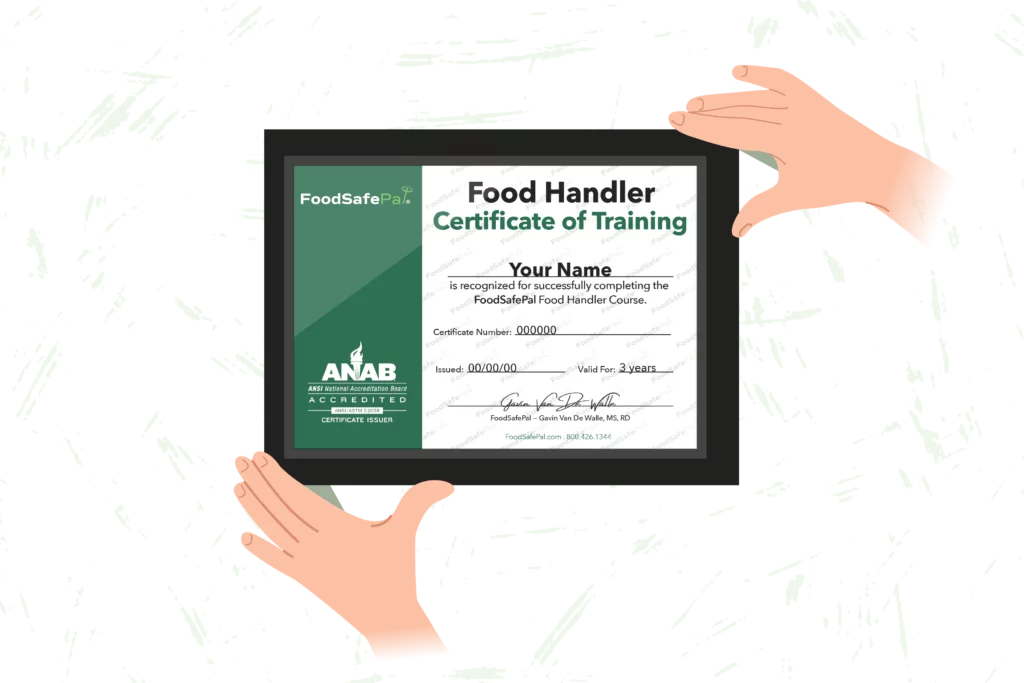
FoodSafePal’s Food Handler course is ANSI-National Accreditation Board (ANAB)-accredited, fully online, and takes about 90 minutes to complete. Once you pass, you’ll get instant access to your digital card and certificate, with the option to order a printed copy.
For those wanting deeper training, FoodSafePal’s Food Manager Training is also available to help prepare for the accredited CFPM exam launching soon.
Get Your Pennsylvania Food Handlers Card
Instant certificate. 100% online in about 90 minutes.
Summary
Pennsylvania doesn’t require food safety training to sell homemade goods, but many local jurisdictions expect basic food safety knowledge, and completing training can strengthen your application, help inspections go smoothly, and build trust with customers. FoodSafePal’s Food Handler and Food Manager Training courses gives you the knowledge and confidence to operate safely, even if not required.
Labeling requirements
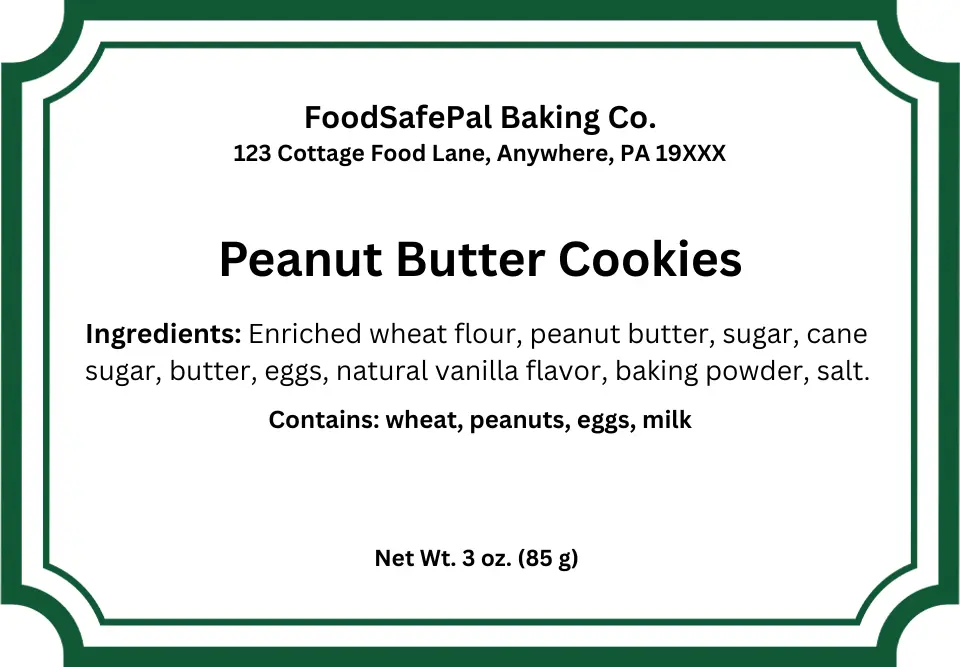
Pennsylvania’s LFE program requires labeling that complies with state and federal packaged food regulations. Every packaged product must include:
- The product name
- Your business name and address
- Ingredients listed in descending order by weight
- Major allergens
- Net weight or volume
A typical label might look like:
Additional requirements
- Nutritional information is required if you ship interstate or make health claims (e.g., “low fat”).
- Unpackaged bakery items — such as wedding cakes or items sold directly at markets — do not require a label, but ingredient information must be available upon request.
- Acidified or fermented products must include batch logs, pH records, and corrective actions as required by PDA.
- Products shipped across state lines may be subject to federal labeling regulations.
Summary
Pennsylvania requires standard packaged food labeling, including ingredient lists, allergens, business address, and net quantity. Unpackaged bakery items may be exempt, but ingredient information must still be accessible. Acidified foods include additional recordkeeping requirements related to pH testing and batch logs.
The bottom line
Pennsylvania allows you to make and sell an exceptionally broad range of homemade foods, including baked goods, candies, dry goods, fermented foods, acidified foods, juices, and even meat jerky. The trade-off is a more rigorous startup process that includes zoning approval, a business plan, lab testing for some foods, and a home inspection.
Food safety training is not required statewide, but many local jurisdictions expect basic training, and completing an ANAB-accredited food handler course, like the one offered by FoodSafePal, can help you demonstrate competence, pass inspections confidently, and build trust with customers and markets.
FoodSafePal’s ANAB-accredited Food Handler course takes about 90 minutes, provides instant certification, and can help you start your Pennsylvania cottage food business with confidence. Its Food Manager Training also prepares you for the accredited CFPM exam that will soon be available.
Get Your Pennsylvania Food Handlers Card
Instant certificate. 100% online in about 90 minutes.